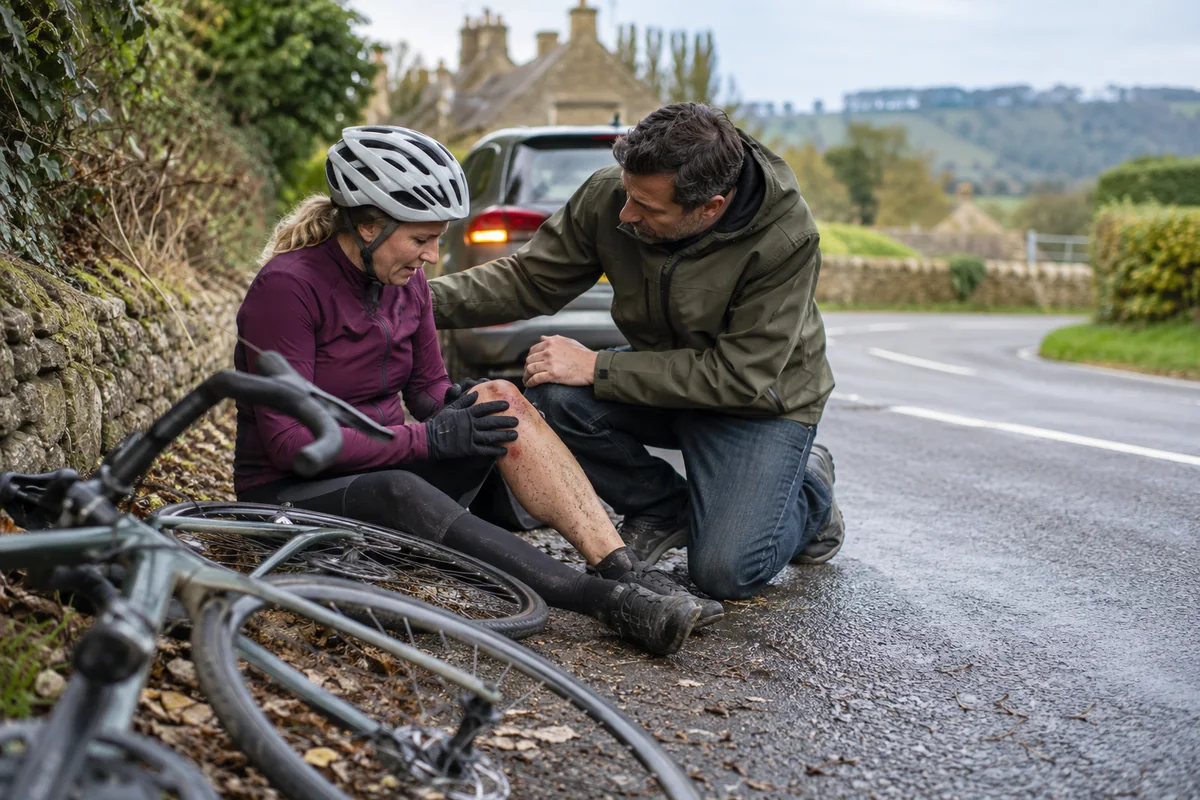
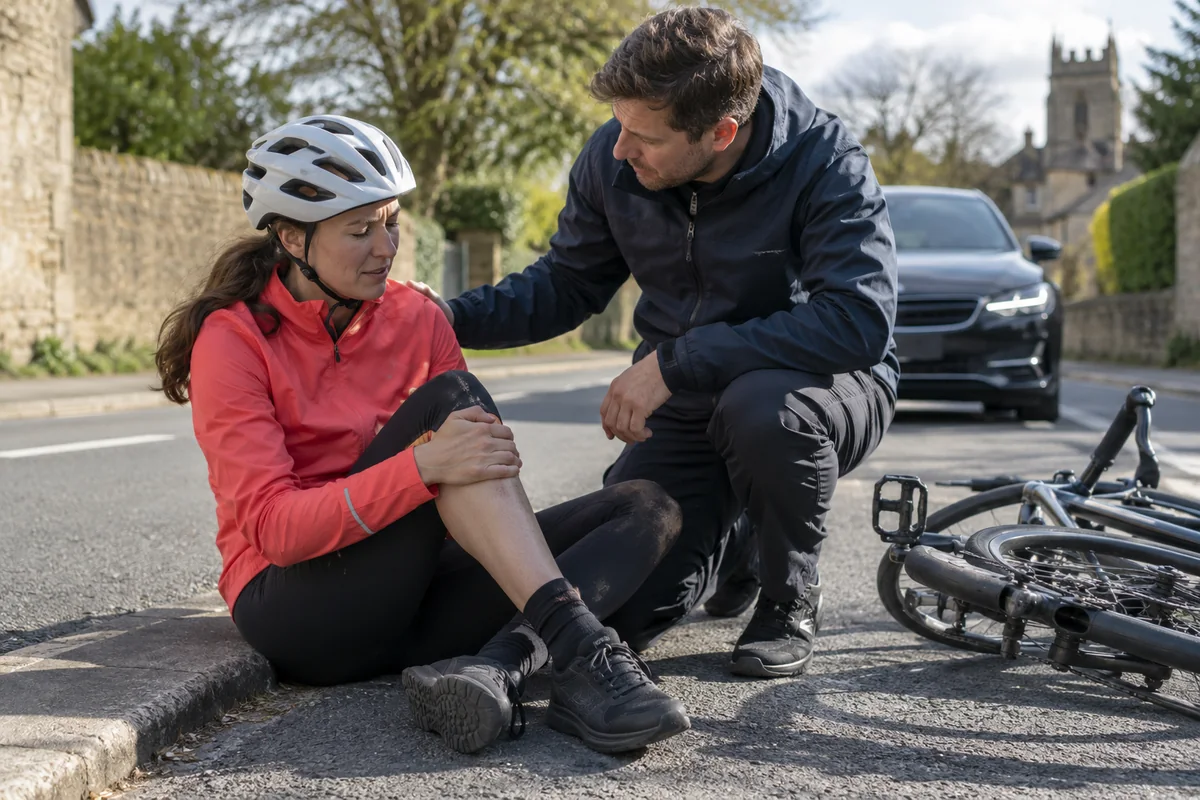
The short version
- Move out of danger if possible
- Call emergency services for serious risk
- Exchange factual details
- Preserve evidence and seek medical help
Safety and medical attention
Call emergency services when there is serious injury, continuing danger or another urgent risk. Do not move an injured person unless leaving them creates greater danger, and follow the operator's instructions.
Adrenaline can mask injury. Seek assessment for head impact, significant pain, loss of movement, breathing difficulty, confusion or worsening symptoms.
Details and evidence
Record facts without arguing or making speculative admissions. Preserve damaged equipment and original files rather than editing the only copy.
- Names and contact details
- Vehicle registration and driver details
- Insurer information where available
- Witness names and numbers
- Photographs of positions, damage and road conditions
- Camera locations and original video files
Reporting and follow-up
Drivers have duties to stop and provide information in qualifying accidents, with police reporting requirements where details are not exchanged. Report crime, hit-and-run or dangerous behaviour through the appropriate police route.
Notify relevant insurers or membership organisations promptly. Keep receipts and records of lost work, travel, treatment and repairs, and obtain legal advice where injury or substantial disputed loss is involved.
Check the current guidance
Rules, schemes and product ranges can change. These live links are the authoritative or independent starting points used for this guide.