The short version

  • Get out of danger first
  • Report the exact defect
  • Identify the highway authority
  • Keep photographs, receipts and damaged parts
01

Record the location safely

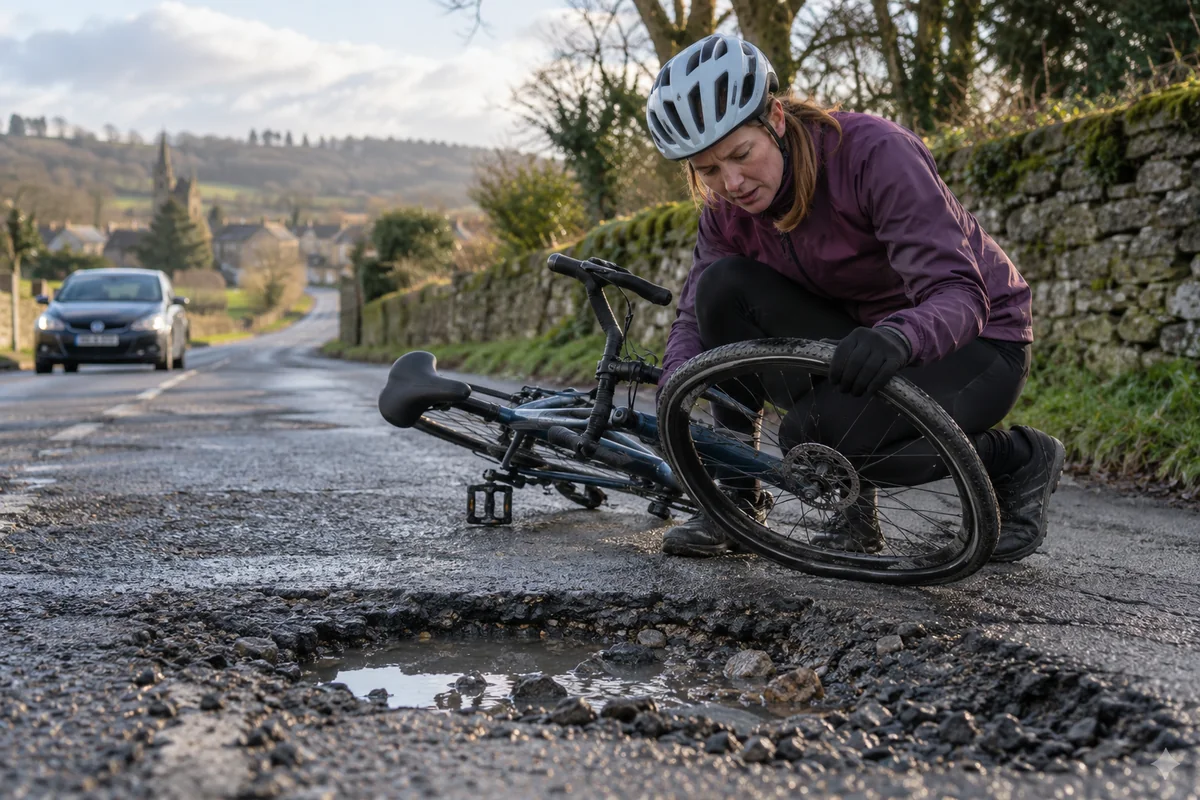
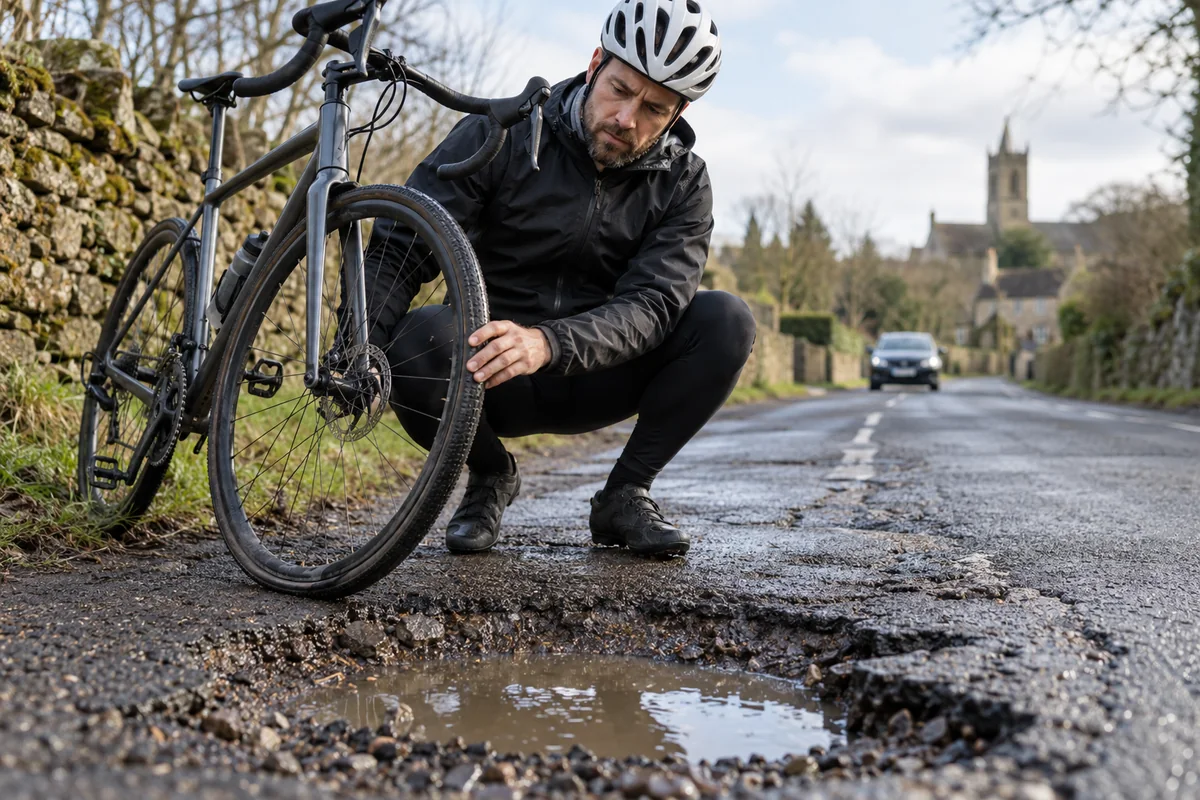
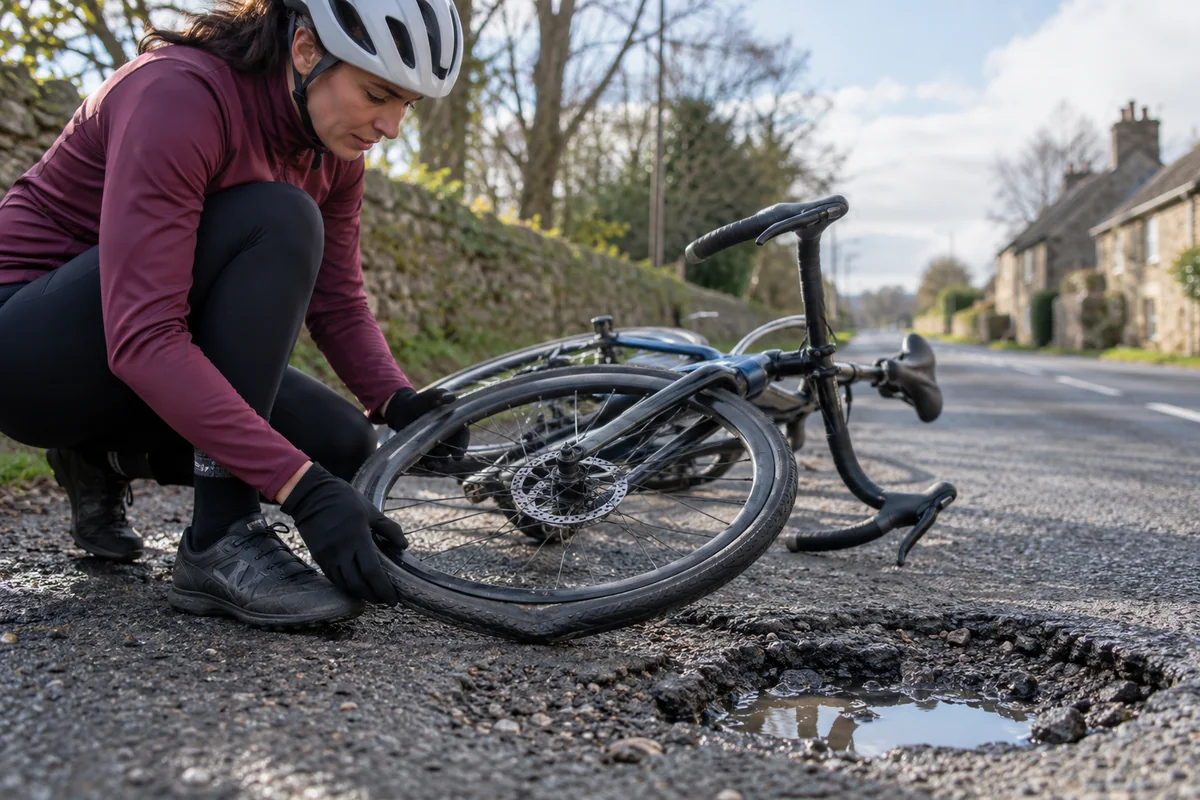
Do not stand in traffic to measure or photograph a defect. Record road name, direction, landmark or coordinates and take safe photographs showing context and the surface.

Photograph the bicycle, wheel, tyre, clothing and injuries. Keep damaged parts and obtain an assessment distinguishing impact damage from wear.

Everyday cyclist riding a practical commuter bike on a protected British cycle lane
02

Find the responsible authority

Responsibility can sit with a local council, National Highways, Transport for London, a devolved roads body or a private landowner. Use the official government route to identify the body.

Report the defect as well as making any claim. Keep references, copies of forms and responses.

03

Why claims can be rejected

Highway authorities can have a statutory defence where they demonstrate a reasonable inspection and maintenance system. Proof that a pothole existed is not automatically proof of legal liability.

Set out the chronology, location and loss accurately. Injury or a substantial disputed claim needs qualified advice.

Commuter bicycle being inspected in a clean independent workshop
04

Use several layers of risk reduction

Roadworthy brakes, secure wheels, observation, a suitable route and predictable positioning work together. Clothing, reflective details and a helmet may be part of a rider's personal strategy, but none replaces a mechanically sound bicycle or attention to the road environment.

Check the current Highway Code and lighting requirements rather than relying on an old summary. Conditions change by time of day, traffic level and weather, so a route that feels comfortable in daylight may need a different alternative after dark.

05

Prepare for foreseeable problems

Tell someone the route for an unfamiliar or longer ride, keep a charged phone and carry tools only when they fit the bicycle and you know how to use them. Slow down for poor visibility, wet surfaces, pedestrians, horses and junctions where another road user may not have seen you.

After a near miss or equipment problem, review what happened without assuming a single cause. A route change, earlier signal, different road position, service or additional light may each address a different part of the risk.

Older commuter bicycle details being checked before a used-bike purchase
Primary sources

Check the current guidance

Rules, schemes and product ranges can change. These live links are the authoritative or independent starting points used for this guide.