The short version
- If a step feels uncertain, stop and use a qualified bicycle mechanic.
- Never ride with brakes, steering or wheels that you suspect are unsafe.
- Use the component manufacturer's instructions for torque settings and model-specific procedures.
Before you start
Work somewhere bright and stable. Clean dirt from the area first so that you can see what is moving and avoid carrying grit into threads or bearings. Photograph the original setup if several parts must be removed.
- Use tools that fit the fastener properly
- Keep small parts in removal order
- Do not force a seized or cross-threaded component
- Check the maker's manual for your exact part
Confirm the tube and find what caused the puncture
Match the tube to the tyre diameter and a width range that includes the size printed on the tyre sidewall. Check the valve type and valve length against the rim before removing the old tube.
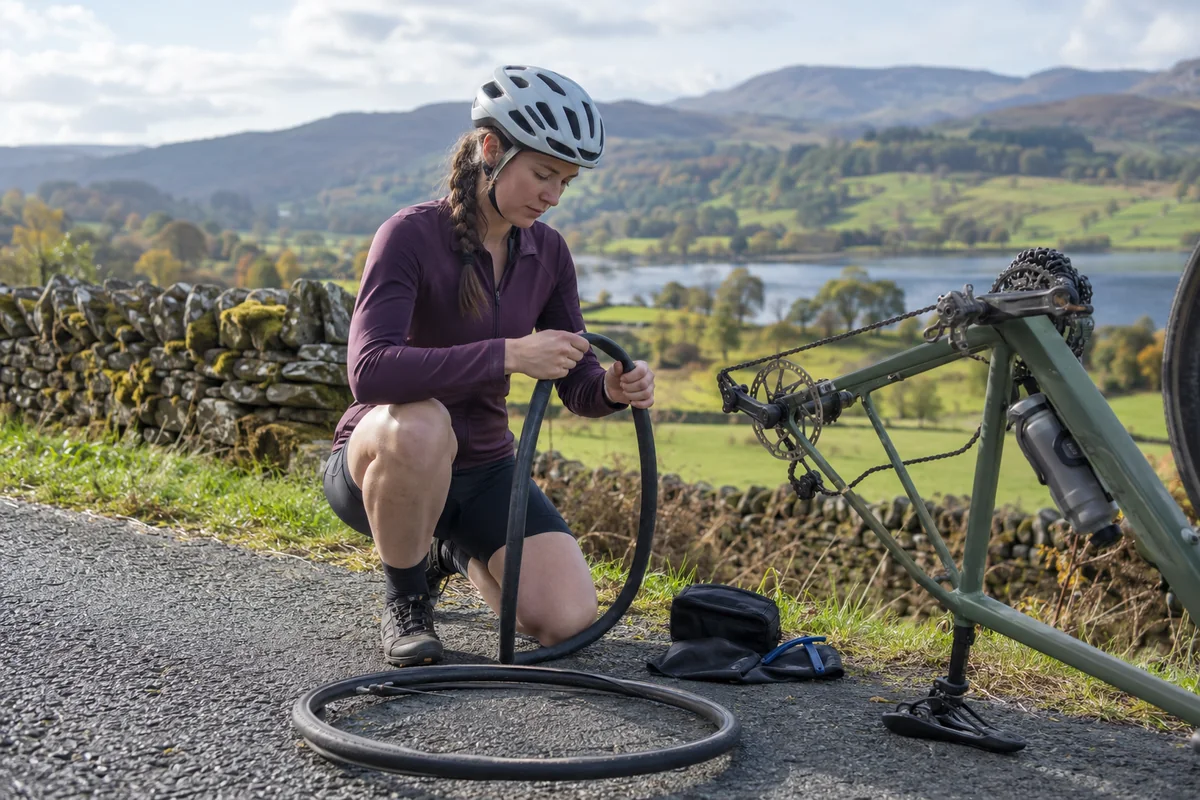
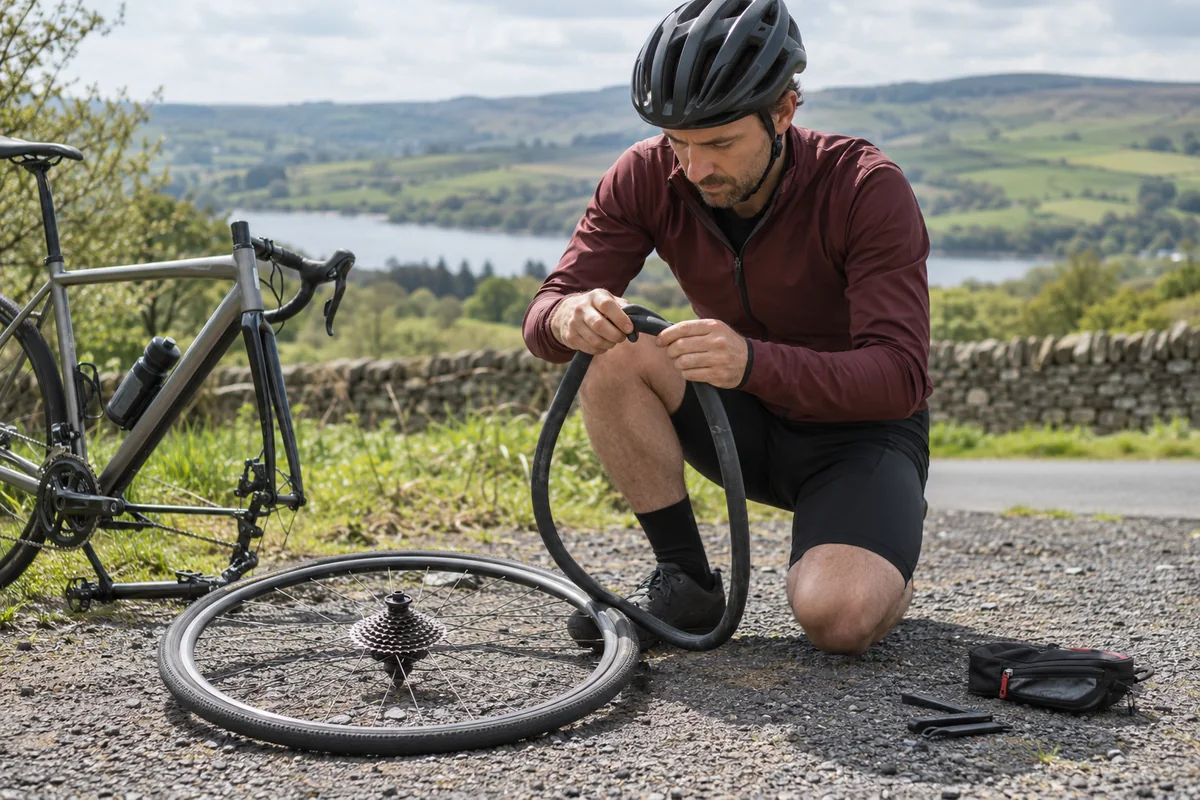
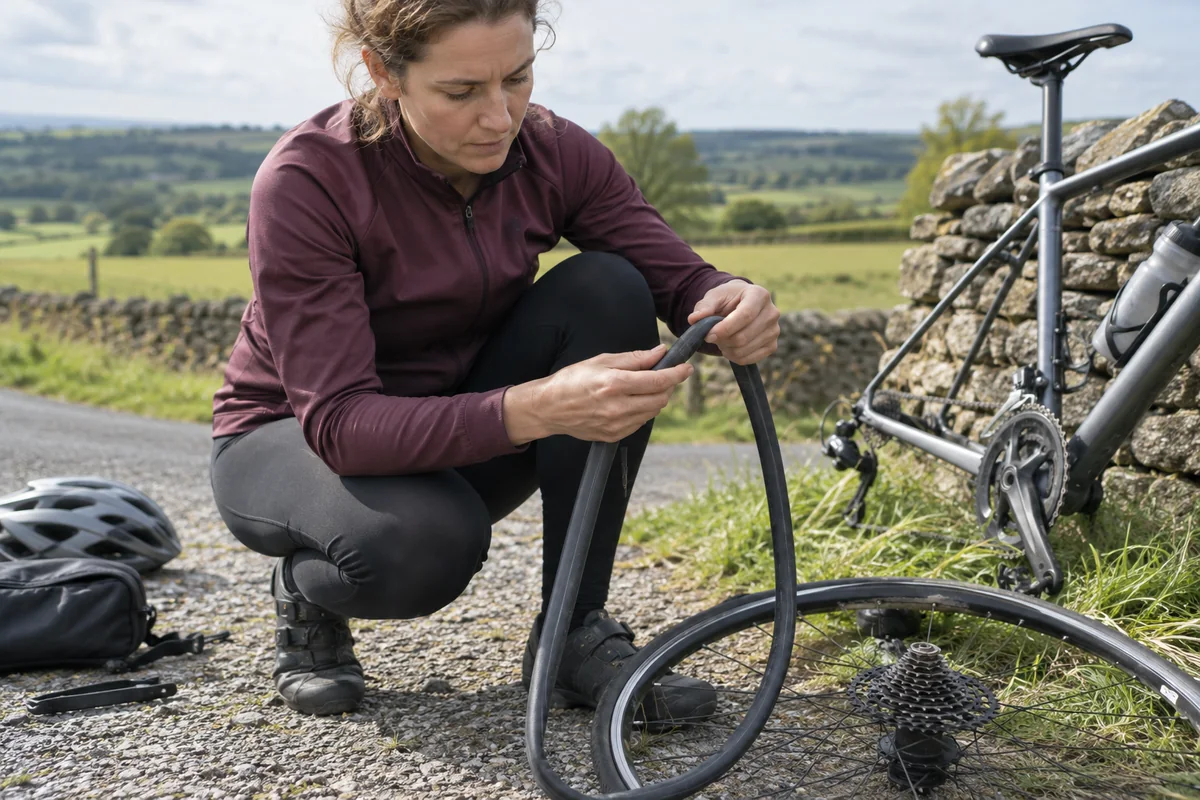
Line the punctured tube up with the tyre and rim so the leak points to the likely cause. Glass or wire in the tread, a split casing, displaced rim tape and paired snake-bite holes need different remedies; fitting a fresh tube without correcting the cause usually produces another puncture.
Step by step
- 1
Shift to a suitable gear and remove the wheel using the bicycle maker's method.
- 2
Deflate fully and use tyre levers carefully to lift one tyre bead from the rim.
- 3
Remove the tube and inspect it, the tyre casing and rim tape to find the cause.
- 4
Add a small amount of air to the new, correctly sized tube and place it inside the tyre.
- 5
Seat the tyre bead without pinching the tube, inflate gradually and check the bead line is even.
- 6
Refit the wheel securely and restore the brake if it was released.
Opens a search; match the product and check the delivered price. Match the tyre sidewall size, valve type and valve length before ordering.
Checks before riding
Test the repair while the bicycle is stationary, then make a short, low-speed test ride away from traffic. Recheck anything that was loosened after the first ride.
- The tyre bead is even on both sides
- The wheel is secured correctly
- The brake works and does not rub
- The tyre is within its marked pressure range
When to use a bike shop
Book a mechanic if a component is cracked, badly corroded, repeatedly slips out of adjustment or needs specialist tools. Safety-critical work is not the place to improvise, and a quick professional repair is often cheaper than replacing a damaged part later.
Check the current guidance
Rules, schemes and product ranges can change. These live links are the authoritative or independent starting points used for this guide.