The short version
- Best for: year-round commuters who value easy mounting and low drivetrain maintenance, especially when the bike is ridden in wet clothes or stored indoors
- How the electrical assistance is delivered: Bosch Active Line Plus, 50 Nm.
- Battery and charging capacity: Bosch CompactTube 400 Wh
- Main trade-off: No motor or battery gain over the cheaper chain version
Where the District+ 2 Belt Lowstep fits
The clearest match is year-round commuters who value easy mounting and low drivetrain maintenance, especially when the bike is ridden in wet clothes or stored indoors. Compare the complete specification and available independent coverage before choosing a size or variant.
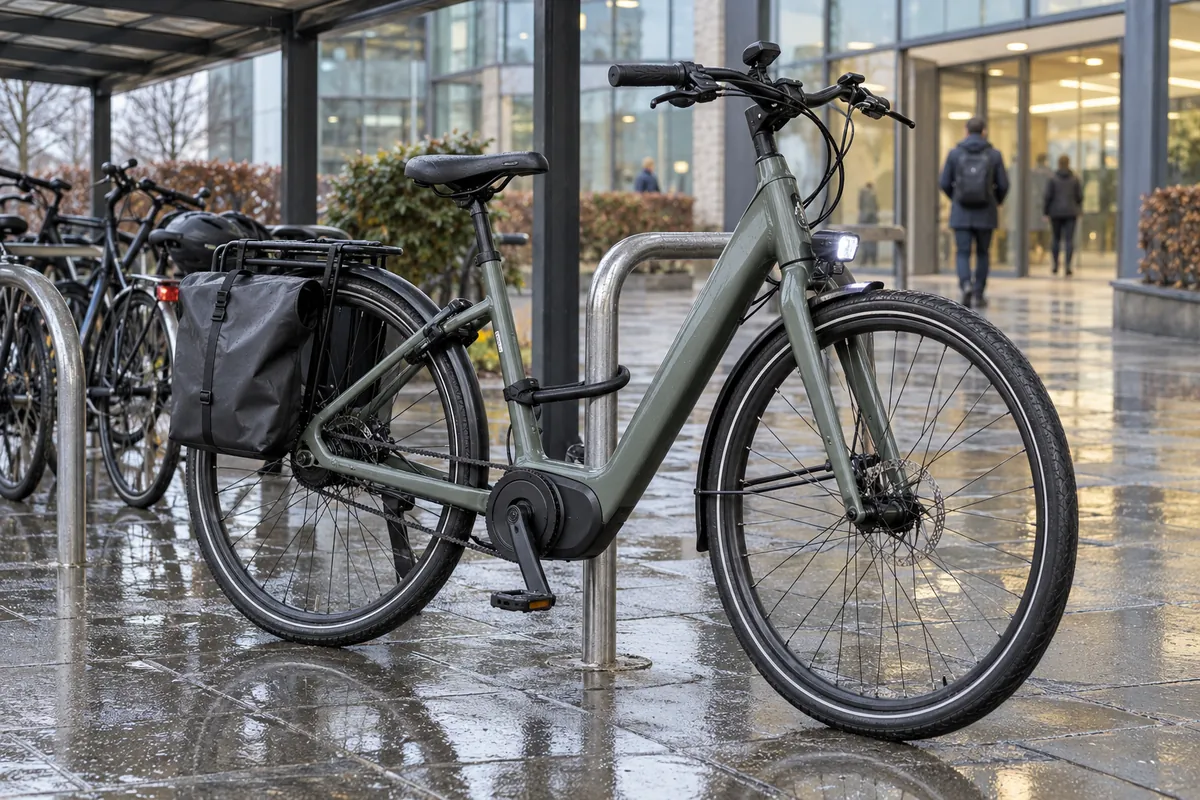
Motor, controls and UK legality
The motor is Bosch Active Line Plus, 50 Nm.. The controls are Bosch Purion 200.
Bosch Active Line Plus provides the same stated 50Nm as the other District+ 2 builds. Independent tests find it quiet and naturally responsive, a good match for an internal hub and belt because the complete system prioritises smooth everyday progress over aggressive acceleration.
The newer 60Nm Active Line Plus should not be confused with this listed 50Nm unit. Riders with steep, heavily loaded routes should compare the 75Nm District+ 4 rather than expecting the belt variant to climb more strongly than the chain District+ 2.
For use as an electrically assisted pedal cycle in Great Britain, the maximum continuous rated motor power must not exceed 250W, assistance must cut out by 15.5mph and the pedals must be able to propel the bike. Check the label and delivered configuration rather than relying on a category name.
| Listed price | £1,949 |
|---|---|
| Motor | Bosch Active Line Plus, 50 Nm. |
| Battery | Bosch CompactTube 400 Wh |
| Range information | No numerical range is stated in the accessible listing; route, rider, weather and assistance level materially affect distance |
| Controller | Bosch Purion 200 |
| Frame | Alpha Smooth Aluminium, Bosch Compact PowerTube and belt drive, internal cable routing, post-mount disc |
| Transmission | Shimano Nexus Revo, 7-speed; Gates CDC CentreTrack, 22T |
| Brakes | Shimano MT200 hydraulic disc |
| Tyres | Bontrager H2 Comp, wire bead, 30 tpi, 27.5x2.00 |
| Fork and suspension | SR Suntour NVX30, coil spring, preload adjuster, 100 mm QR, 60 mm travel |
| Complete-bike weight | Not stated in the accessible the seller listing |
| Listed sizes | S, M, L |
| Listed colours | Trek Black 25 |
Battery, charging and realistic range
The listed battery is Bosch CompactTube 400 Wh. No numerical range is stated in the accessible listing; route, rider, weather and assistance level materially affect distance
The 400Wh CompactTube is shared across the District+ 2 listings and offers no range advantage for choosing the belt. It is a sensible urban capacity, with real distance governed by hills, rider and luggage mass, temperature and support level.
A belt can reduce drivetrain maintenance but does not reduce the motor's energy demand enough to promise a meaningful range gain. Buyers still need convenient charging access and a realistic reserve for winter or detours.
Use only the approved compatible charger, charge away from escape routes and stop using a battery that is damaged, swollen, leaking or unusually hot. Ask for the replacement-pack price and warranty conditions before the original battery becomes a problem.
Frame, fit and ride character
The frame specification is Alpha Smooth Aluminium, Bosch Compact PowerTube and belt drive, internal cable routing, post-mount disc. Fork and suspension details are SR Suntour NVX30, coil spring, preload adjuster, 100 mm QR, 60 mm travel. The tyres are Bontrager H2 Comp, wire bead, 30 tpi, 27.5x2.00.
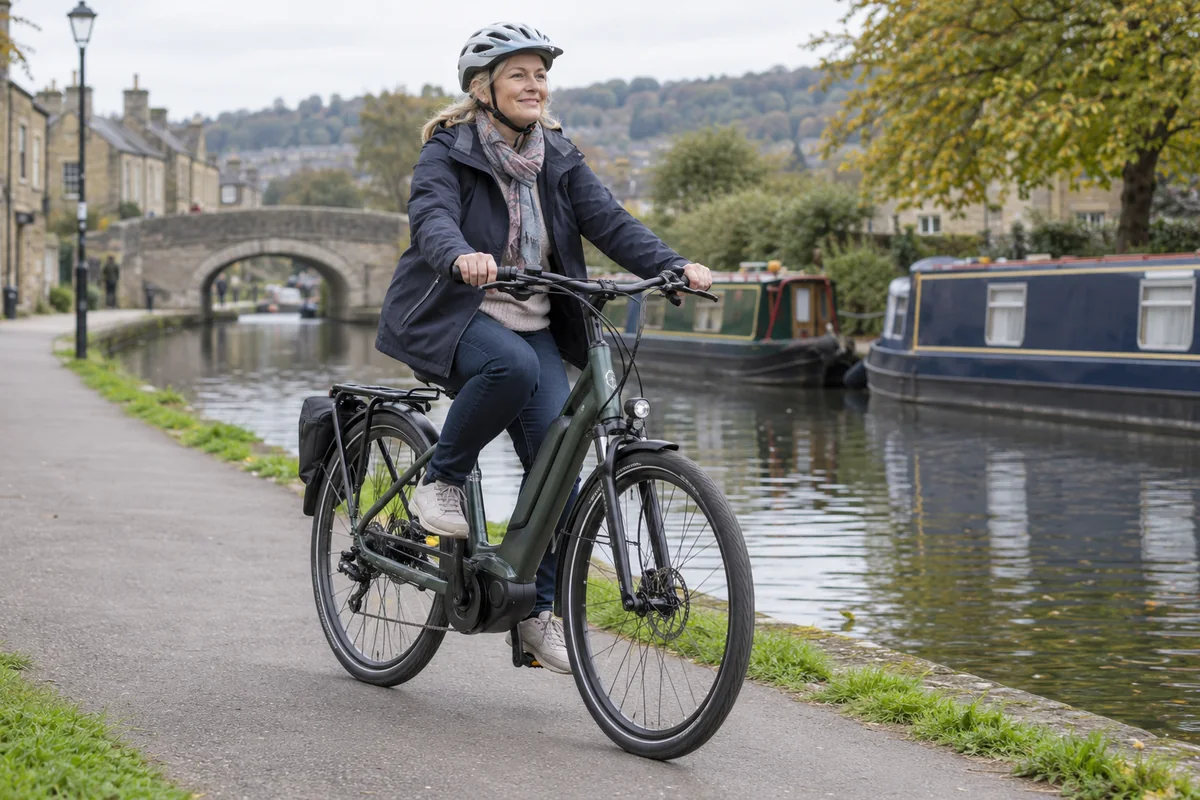
A low-step frame simplifies stops, while the 60mm coil fork and 2.0in tyres soften ordinary broken roads. The belt and internal hub should produce a clean, quiet pedalling experience, and hub gears allow a lower gear to be selected while stationary.
A seven-speed hub has fewer ratios than the District+ 3's eight-speed unit, and the coil fork is basic comfort suspension. The bike is tuned for steady transport, not fast sport riding or rough off-road use.
Brakes, transmission and everyday equipment
The bike uses Shimano MT200 hydraulic disc. Transmission is Shimano Nexus Revo, 7-speed; Gates CDC CentreTrack, 22T. The equipment information is Lights, Kickstand, Cargo Rack and mudguard; Alloy, suspension, 31.6 mm, 300 mm length.
The Gates CDC belt avoids chain oil and routine lubrication, an appreciable benefit for trouser legs and all-weather commuting. Lights, rack, mudguard and kickstand complete the transport package, while Purion 200 keeps controls and core ride data together.
Belt tension and rear-wheel removal require correct procedure, and replacement parts may be less immediately available than a common chain. The parsed the seller data omits a Chain field but names a Gates CDC sprocket and Belt model; confirm the complete belt specification and local workshop familiarity.
What the published evidence tells us
The recorded price for this build is £1,949. Prices can differ by colour or size, and stock can change; a discount against a reference price does not by itself establish value.
Trek's exact Belt Lowstep page is live, while independent Active Line Plus tests support the motor's quiet, natural behaviour. Bicycling's District 4 test supports the broader benefits of a belt and internal hub on Trek's urban platform, but it is a non-electric adjacent model, not this bike.
Confirm the exact belt, contact points and maintenance requirements on product 931457, then include rough surfaces and gradients in a test ride.
Advantages and disadvantages
The useful comparison is whether the complete build suits the regular route, storage and service plan. A premium motor cannot compensate for poor fit, while a modest component can be entirely sensible on the right type of bike.
- Advantage: Clean and low-maintenance Gates belt
- Advantage: Accessible low-step frame
- Advantage: Quiet 50Nm Bosch mid-drive
- Advantage: Complete city equipment with suspension comfort
- Disadvantage: No motor or battery gain over the cheaper chain version
- Disadvantage: Seven hub gears give less range choice than District+ 3
- Disadvantage: Belt service and parts may require a suitable shop
- Disadvantage: Basic coil fork adds weight
Buying checks and RideIn verdict
Confirm the exact product code, frame size, colour, battery capacity, assistance configuration and included equipment before paying. Ask who will handle electrical diagnosis, warranty labour and replacement components, then test the brakes, controls and fit before committing to regular use.
The most appealing District+ 2 for low-mess, year-round transport, as long as the buyer values the belt enough to accept its price and specialist service considerations.
Technical and safety references
RideIn compared the captured retailer listing with the cited manufacturer and independent material. RideIn has not ridden this individual bike, and independent coverage of another year or build is used only as context, not as proof of this model's performance. The retailer source remains visible because it is the evidence for the recorded price, size and build snapshot.
- Trek District+ 2 Belt Lowstep at the seller↗Current the seller UK listing, price, sizes, colours and sale specification.
- Trek official electric-bike range↗Manufacturer range and system context; the exact the seller build remains the review reference.
- Trek official product information↗Official product specifications and system details.
- road.cc review↗Independent editorial coverage used for ride context; the exact the seller components may differ.
- GRAN FONDO review↗Independent editorial coverage used for ride context; the exact the seller components may differ.
- Bicycling review↗Independent editorial coverage used for ride context; the exact the seller components may differ.
- GOV.UK electric-bike rules↗
- UK Government e-cycle battery safety↗
- UK product-safety alerts and recalls↗