The short version
- Best for: gravel and bikepacking riders who value wireless shifting and wide gearing but prefer a rigid fork and do not need the SL 7's carbon wheels
- How the electrical assistance is delivered: confirm the exact motor and UK assistance configuration
- Battery and charging capacity: TQ 360 Wh
- Main trade-off: Same 360Wh battery and alloy wheels as the cheaper SL 5
Where the Checkpoint+ SL 6 AXS fits
The clearest match is gravel and bikepacking riders who value wireless shifting and wide gearing but prefer a rigid fork and do not need the SL 7's carbon wheels. Compare the complete specification and available independent coverage before choosing a size or variant.
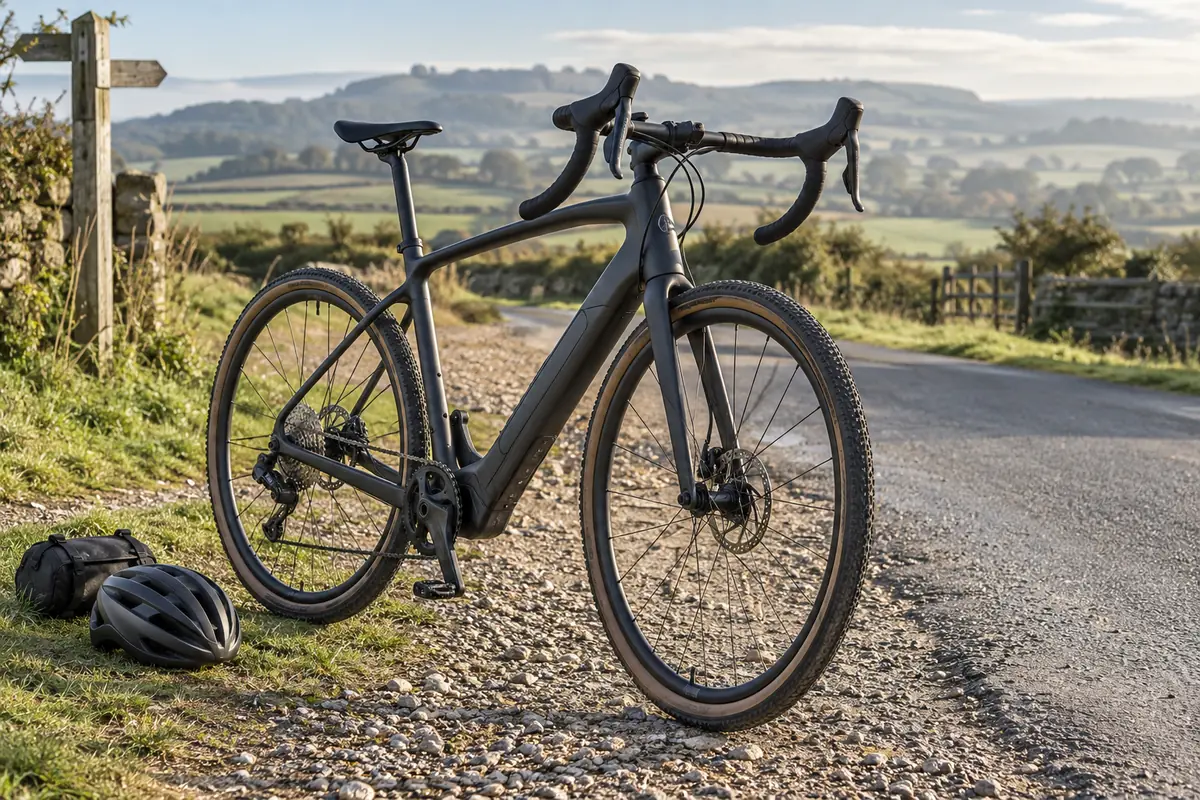
Motor, controls and UK legality
The available specification does not identify the motor precisely. The controls are TQ LED display with Bluetooth & ANT+ connectivity.
The compact TQ HPR60 delivers up to 60Nm and 350W peak, with discreet controls positioned so assistance can be changed without leaving the hoods. Independent Checkpoint+ testing characterises it as quiet and natural, giving useful help into wind or uphill without overwhelming normal gravel-bike handling.
Its 200 per cent maximum assistance is modest beside full-power e-MTB systems, which keeps the experience rider-led but demands sensible gearing on steep loaded climbs. The 10-52T cassette is well matched to that purpose.
For use as an electrically assisted pedal cycle in Great Britain, the maximum continuous rated motor power must not exceed 250W, assistance must cut out by 15.5mph and the pedals must be able to propel the bike. Check the label and delivered configuration rather than relying on a category name.
| Listed price | £5,000 |
|---|---|
| Motor | Not stated for the UK-delivered configuration in the accessible the seller listing; other source material names TQ-HPR60, 60 Nm. |
| Battery | TQ 360 Wh |
| Range information | Up to 50 miles (80 km) on the internal battery, or up to 90 miles (145 km) with the optional range extender. |
| Controller | TQ LED display with Bluetooth & ANT+ connectivity |
| Frame | 500 Series OCLV Carbon, TQ drive system, IsoSpeed, hidden mudguard mounts, rack mounts, integrated frame bag mounts, invisible cable routing, flat-mount disc, integrated chainkeeper, UDH, 142x12 mm chamfered thru axle |
| Transmission | Specification conflict: the seller names a 13-speed control but lists a 12-speed cassette, chain and derailleur. Confirm the supplied AXS build. |
| Brakes | Not stated precisely in the accessible the seller listing |
| Tyres | Bontrager Girona Pro, Tubeless Ready, GR puncture protection, aramid bead, 60 tpi, 700x42 mm |
| Fork and suspension | Checkpoint full carbon, tapered carbon steerer, mudguard mounts, triple rack mounts, flat-mount disc, 12x100 mm chamfered thru axle |
| Complete-bike weight | 13.76 kg in size ML, measured with tubeless-ready sealant and no tubes. |
| Listed sizes | L |
| Listed colours | Fjord Blue 26 |
Battery, charging and realistic range
The listed battery is TQ 360 Wh. Up to 50 miles (80 km) on the internal battery, or up to 90 miles (145 km) with the optional range extender.
The integrated 360Wh battery is unchanged from the cheaper SL 5, so the extra spend does not buy more electrical range. It keeps the chassis slender and supports day rides, but repeated climbing and high assistance can consume the reserve quickly.
Trek supports a 160Wh range extender for longer use. Carrying the charger or extender should form part of a bikepacking plan, and the quoted maximum range should be treated as a favourable-condition estimate rather than an itinerary guarantee.
Use only the approved compatible charger, charge away from escape routes and stop using a battery that is damaged, swollen, leaking or unusually hot. Ask for the replacement-pack price and warranty conditions before the original battery becomes a problem.
Frame, fit and ride character
The frame specification is 500 Series OCLV Carbon, TQ drive system, IsoSpeed, hidden mudguard mounts, rack mounts, integrated frame bag mounts, invisible cable routing, flat-mount disc, integrated chainkeeper, UDH, 142x12 mm chamfered thru axle. Fork and suspension details are Checkpoint full carbon, tapered carbon steerer, mudguard mounts, triple rack mounts, flat-mount disc, 12x100 mm chamfered thru axle. The tyres are Bontrager Girona Pro, Tubeless Ready, GR puncture protection, aramid bead, 60 tpi, 700x42 mm.
The rigid carbon fork, rear IsoSpeed and 42mm tubeless-ready tyres keep this closer to a conventional adventure gravel bike than the suspended SL 7. Wireless shifting is crisp and convenient, while the 10-52T spread gives more low-gear margin than a close-ratio road setup.
The SL 6 uses the same alloy Paradigm Comp wheels as the SL 5, so the principal ride upgrade is shifting rather than reduced rotating mass or additional front-end compliance. Riders who do not care about AXS may find the mechanical model equally satisfying.
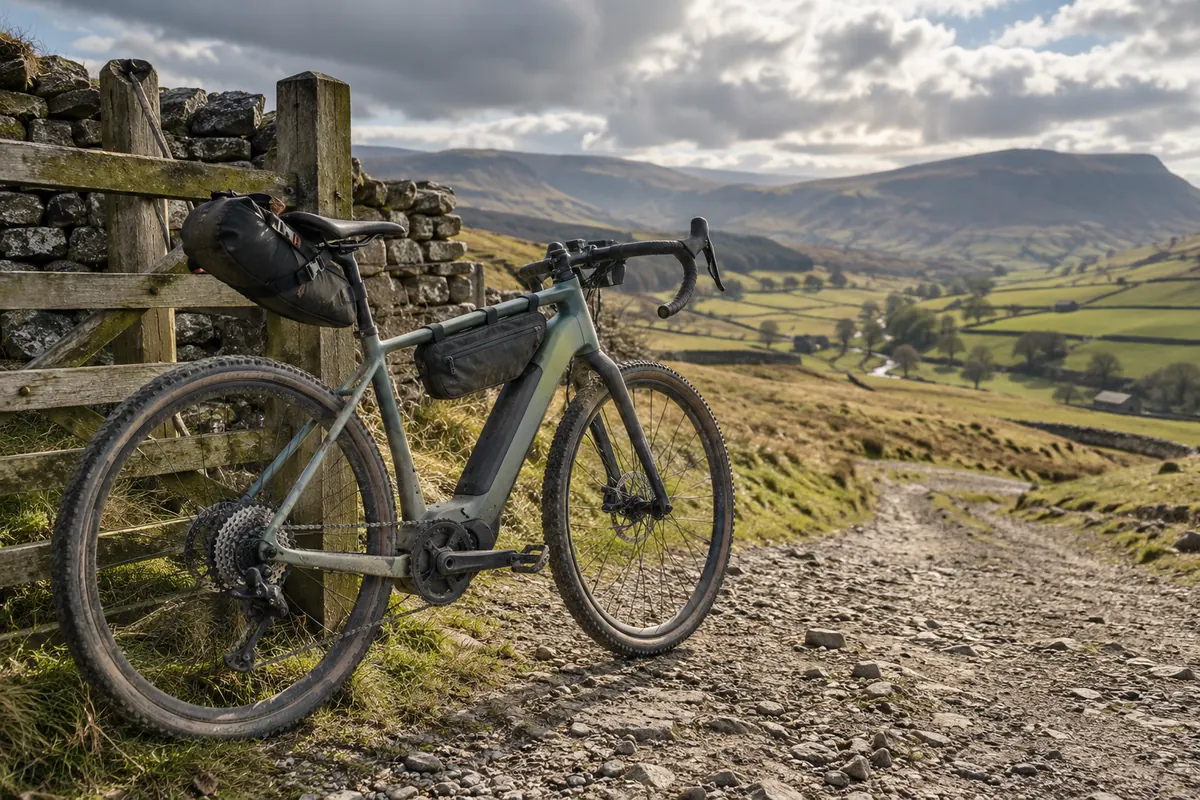
Brakes, transmission and everyday equipment
The available specification does not identify the brakes precisely. The exact transmission should be confirmed before purchase. The equipment information is Bontrager carbon, 27.2 mm, 8 mm offset, 330 mm length.
Rack, mudguard, frame-bag and triple fork mounts make the rigid build particularly adaptable for luggage. A UDH-compatible frame and widely used SRAM Eagle Transmission architecture also give a clear replacement path, though electronics need charged batteries and compatible diagnostic support.
The seller calls the Rival control 13-speed while listing a 12-speed chain, cassette and GX derailleur, and its own description calls the drivetrain 12-speed. That is almost certainly a data inconsistency, but the actual controls and firmware compatibility should be confirmed rather than guessed.
What the published evidence tells us
The recorded price for this build is £5,000. Prices can differ by colour or size, and stock can change; a discount against a reference price does not by itself establish value.
The seller and Trek agree on the central SL 6 AXS platform, and independent Checkpoint+ reviews support the motor and chassis conclusions. The published drivetrain-speed mismatch is preserved here because no editorial source can responsibly resolve the exact stock build without inspecting it.
Independent reports cover the Checkpoint+ family and, in some cases, other trims. Use them for shared-system context, then judge this precise component package and support terms separately.
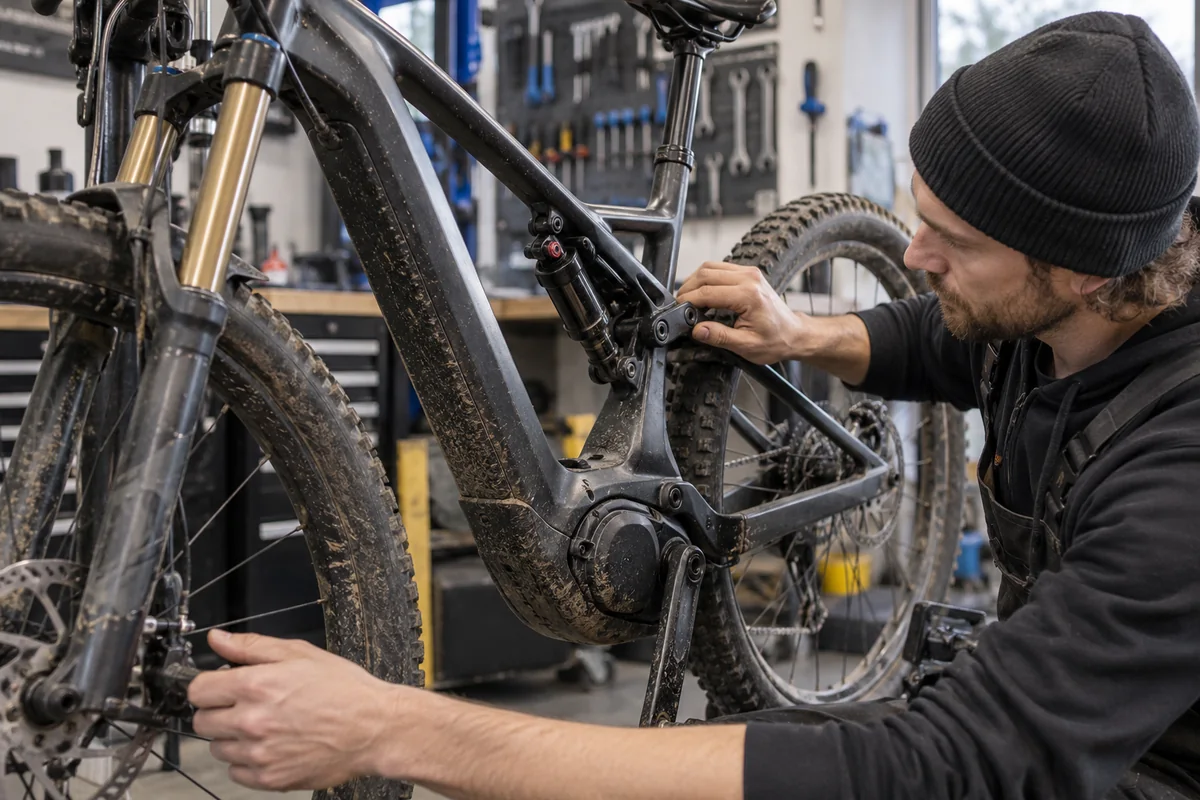
Advantages and disadvantages
The useful comparison is whether the complete build suits the regular route, storage and service plan. A premium motor cannot compensate for poor fit, while a modest component can be entirely sensible on the right type of bike.
- Advantage: Smooth and unobtrusive TQ HPR60 assistance
- Advantage: Wireless wide-range SRAM drivetrain
- Advantage: Carbon frame, IsoSpeed and useful luggage mounts
- Advantage: Rigid fork preserves direct handling and fork cargo mounts
- Disadvantage: Same 360Wh battery and alloy wheels as the cheaper SL 5
- Disadvantage: Wireless shifting adds charging and electronic-service duties
- Disadvantage: the seller drivetrain-speed data is internally inconsistent
- Disadvantage: No front suspension for repeated rough impacts
Buying checks and RideIn verdict
Confirm the exact product code, frame size, colour, battery capacity, assistance configuration and included equipment before paying. Ask who will handle electrical diagnosis, warranty labour and replacement components, then test the brakes, controls and fit before committing to regular use.
A coherent middle Checkpoint+ for riders who genuinely want AXS; otherwise the SL 5 preserves most of the ride and utility for less money, while the SL 7 adds more meaningful chassis hardware.
Technical and safety references
RideIn compared the captured retailer listing with the cited manufacturer and independent material. RideIn has not ridden this individual bike, and independent coverage of another year or build is used only as context, not as proof of this model's performance. The retailer source remains visible because it is the evidence for the recorded price, size and build snapshot.
- Trek Checkpoint+ SL 6 AXS at the seller↗Current the seller UK listing, price, sizes, colours and sale specification.
- Trek official electric-bike range↗Manufacturer range and system context; the exact the seller build remains the review reference.
- Trek official product information↗Official product specifications and system details.
- Trek official product information↗Official product specifications and system details.
- Trek official product information↗Official product specifications and system details.
- ebike24.com retailer information↗Retailer specification or customer-rating context; this is not an independent test.
- Cyclingnews review↗Independent editorial coverage used for ride context; the exact the seller components may differ.
- GOV.UK electric-bike rules↗
- UK Government e-cycle battery safety↗
- UK product-safety alerts and recalls↗