The short version
- Check the employer's cap
- Confirm EAPC compliance
- Ask how batteries are treated
- Plan servicing and secure storage
Eligibility is broader than the old cap
Government guidance does not impose a tax or National Insurance value ceiling. That allows suitable e-bikes and adapted cycles when the employer and provider support the amount.
The employer can still set a limit or restrict retailers. Obtain approval before paying a deposit.
Check the exact e-bike
Confirm continuous rated motor output, assistance cut-off, working pedals and throttle arrangement. A machine outside EAPC rules may be treated as a motorcycle or moped.
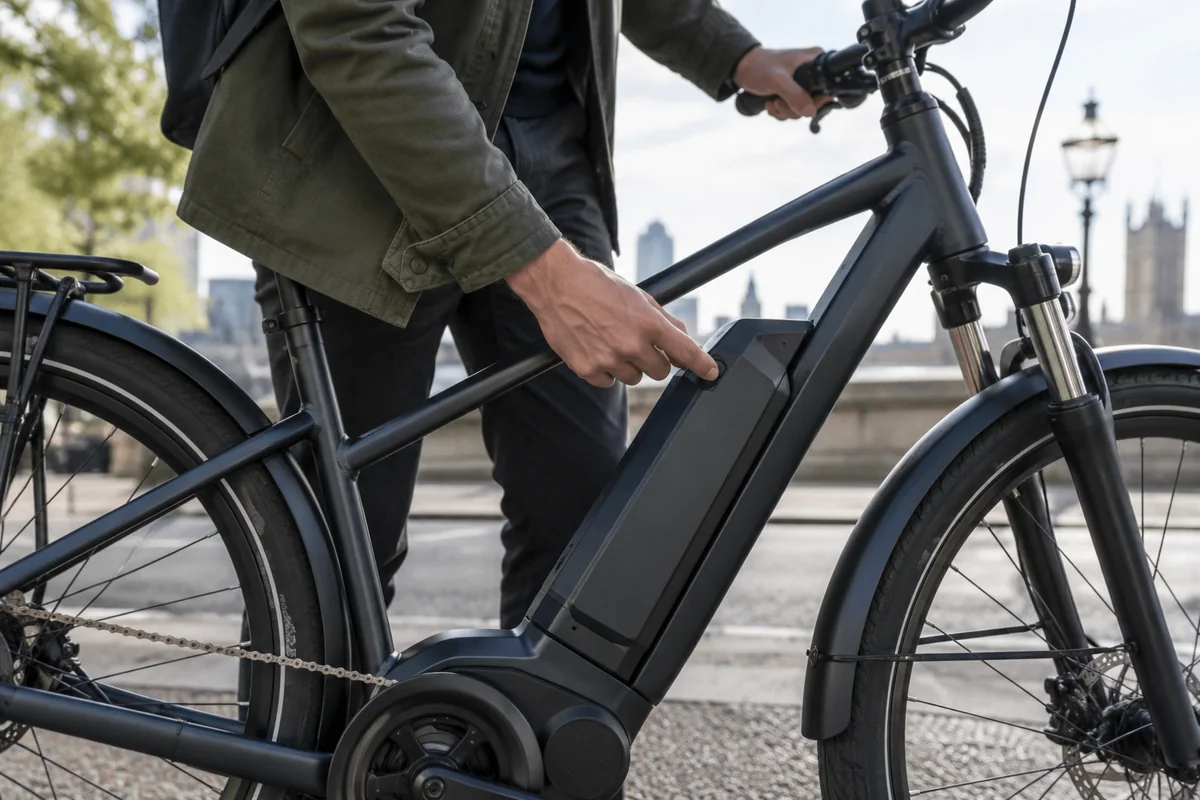
Record motor and battery serial numbers, warranty terms and replacement-battery availability. Ask who handles service while another party owns the bicycle.
Budget for everyday use
Check whether a suitable lock, helmet, lights, luggage and eligible safety equipment can be included. Ask an insurer how the salary-sacrifice bicycle should be valued and who should be named as owner.
Plan charging, storage and the full commute. A heavy e-bike may be difficult to carry or combine with a train even when it makes riding easier.
Check the current guidance
Rules, schemes and product ranges can change. These live links are the authoritative or independent starting points used for this guide.