RideIn verdict
A used Bianchi tri bike can be fast, striking and good value, particularly an Aquila CV with a complete cockpit. It is a poor impulse purchase: fit, brake access, proprietary hardware and crash history matter more than the original groupset level.
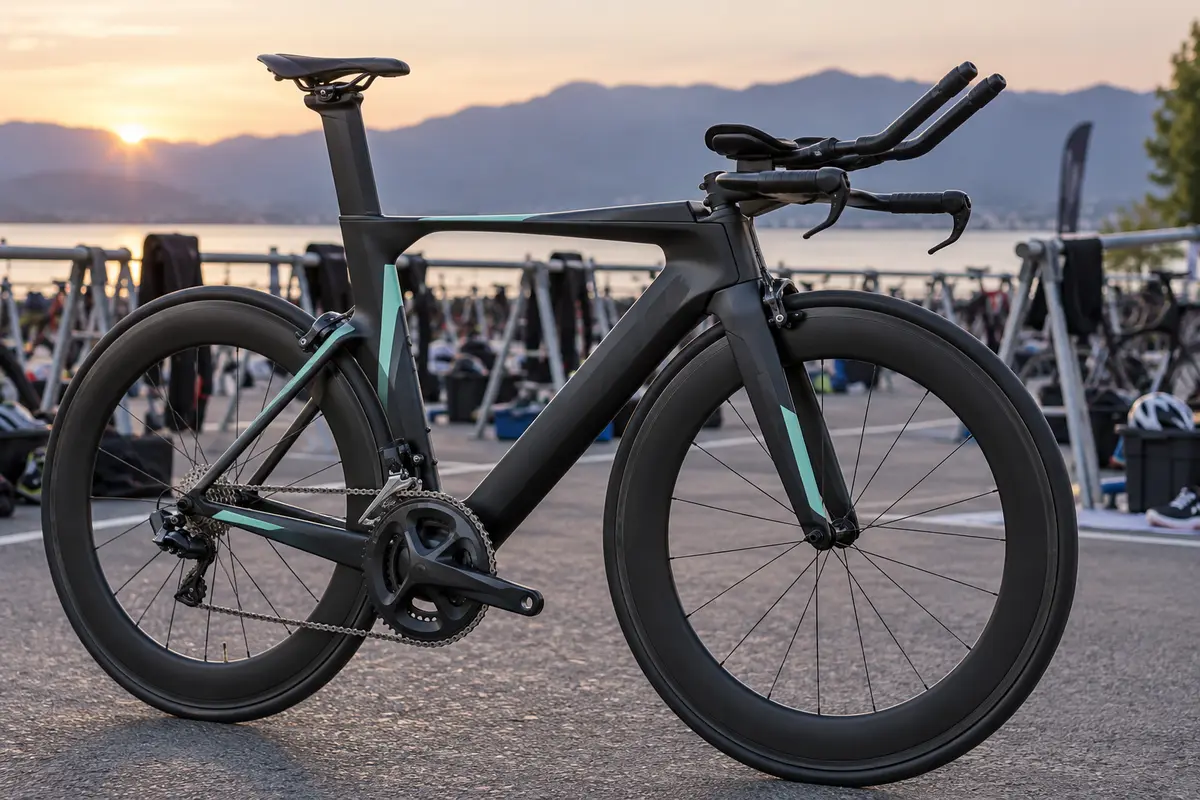
- Non-drafting triathlon
- Time trials on fast, open courses
- Experienced riders with a verified aero fit
- Buyers who have access to a capable workshop
- ‘Bianchi tri bike’ can refer to several unrelated generations
- Integrated cockpits may restrict adjustment
- Deep wheels can be difficult in crosswinds
- Replacement proprietary parts may be scarce
Which Bianchi tri bike?
The search term usually points to the carbon Aquila CV, Bianchi's dedicated time-trial platform from the later 2010s, or to an older Crono-series machine. The Aquila CV used an aerodynamic carbon frame, integrated aero cockpit, reversible seatpost and rim brakes concealed within the frame and fork. Builds were offered with mechanical Ultegra and electronic Dura-Ace Di2 among other configurations.
Older D2 Crono and other Bianchi time-trial bikes have different frames, brakes, cable routes and fit systems. Treat the model name and year as essential information. A generic advert headed only ‘Bianchi tri bike’ is not detailed enough to establish specification or value.
Aero position before aero frame
The rider creates most of the aerodynamic drag, so the useful question is not whether the frame looks fast. It is whether the saddle, pads and extensions can place the rider in a position that is both efficient and sustainable for the target event.
Check pad stack, pad reach, extension length, saddle height and saddle setback before buying. Integrated bars may have fewer adjustment options than a conventional stem and clip-on extensions. If the pads cannot reach the required coordinates, a bargain frame is the wrong bike.
- Record current bike-fit coordinates
- Confirm the cockpit's full adjustment range
- Check that spacers, clamps and fasteners are included
- Allow room for safe steering and comfortable breathing
- Test the position at realistic race effort
How an Aquila CV should ride
The Aquila CV is designed to hold speed on open roads rather than feel lively in constant corners. Its deep frame profiles, aero extensions and forward position reward a steady effort, but low-speed handling and braking access require practice. Bianchi's Countervail material was intended to reduce vibration through the carbon structure.
A deep front wheel or disc rear wheel can amplify crosswind effects. Wheel choice should reflect rider confidence, course exposure and the event rules. A standard endurance road bike with clip-on bars may be the better first step for mixed training, group rides and technical routes.
See current second-hand Bianchi stock. The linked collection may not include this exact model, and availability changes.
Integrated brake and cockpit checks
Hidden rim brakes and internal cables improve the silhouette but make inspection and adjustment less convenient. Operate both brakes from the extensions and base-bar levers where fitted, then inspect cable condition, return action, pad alignment and clearance at the rim.
Confirm that every cockpit cover, pad carrier, riser, clamp and proprietary bolt is present. Missing hardware can be difficult or uneconomic to replace. Electronic-shifting bikes need a healthy battery, correct charger and reliable shifting from every installed control.
Used carbon-frame inspection
Tri bikes can suffer transport damage, transition-rack knocks and crashes that are not obvious in a sales photograph. Inspect the head tube, fork, bottom bracket, seatpost clamp, rear dropouts and the areas around integrated brakes. Look for cracks, soft spots, ripples, paint disturbance or repairs that the seller cannot document.
Check the seatpost has not been cut or clamped outside its limits and that the saddle hardware holds position. A carbon specialist should assess any suspicious mark. Cosmetic wear is common; uncertainty about a structural area is different and should stop the purchase.
Is a Bianchi tri bike worth it?
It can be, if the exact bike fits, is complete and has a credible history. Older rim-brake speed machines may cost far less than modern disc-brake tri bikes while remaining competitive for many amateur events. The Aquila CV's distinctive design is part of its appeal, but should not override practical checks.
Budget for a fit session, fresh tyres, drivetrain wear, brake work and any cockpit changes. Compare that total with a simpler used tri bike using standard stems and brakes. Serviceability and a sustainable position usually deliver more real-world value than an exotic frame bought on appearance alone.
Specification and buying references
Model specifications can change by year and market. Use the bicycle's own details and condition to make the final decision.