The short version
- Check compatibility before buying
- Prefer simple, durable fittings
- Do not obstruct lights or moving parts
- Inspect after the first few rides
Check tyre and frame clearance
Measure the fitted tyre rather than relying only on its printed size. A guard must clear the tyre around its full rotation and leave room at the fork crown, seat stays, chain stays and brakes.
Full-length guards normally control spray best, while clip-on designs can suit bicycles without mounting points. Neither type is safe if it can rotate into the wheel or interfere with steering.
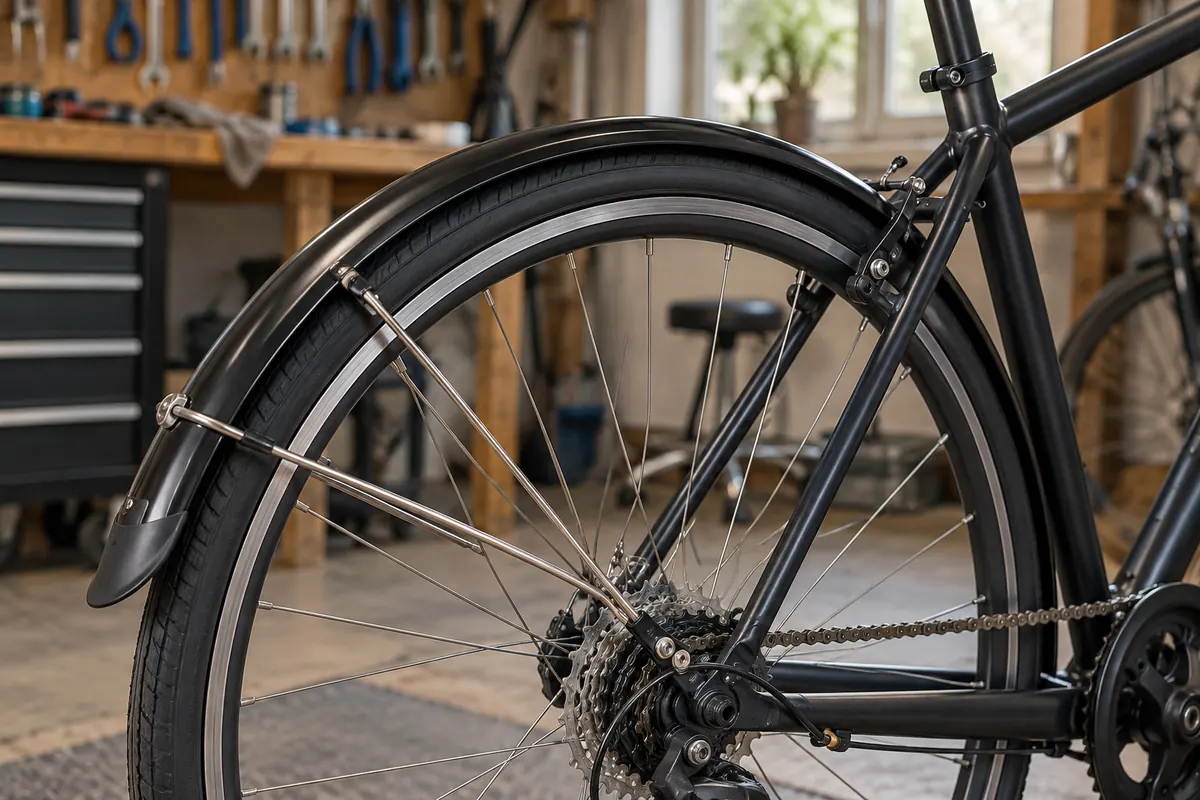
Set the stays and safety releases
Follow the guard maker's fitting order and use any supplied breakaway or safety fittings in the specified position. Trim stays only after alignment has been checked with the wheel secured correctly.
After the first ride, check every fastener and listen for rubbing. Stop immediately if a stick, stone or shifted guard becomes trapped near the tyre.
Check the current guidance
Rules, schemes and product ranges can change. These live links are the authoritative or independent starting points used for this guide.