Company and range overview
TESWAY sells very high-capacity fat-tyre, cargo and all-wheel-drive electric bikes. Its UK-facing site advertises products with extremely high peak output and batteries up to 52V 60Ah, even where the displayed default speed is 15.5mph.
A speed setting does not turn a multi-kilowatt dual-motor machine into an ordinary EAPC. Public-road classification depends on the vehicle's continuous rated power, construction and control behaviour, not only the selected limit on a display.
RideIn has not filled gaps with a generic company biography. Where ownership, headquarters or service details could not be verified from credible sources, the absence is stated because it affects the risk of a direct purchase.
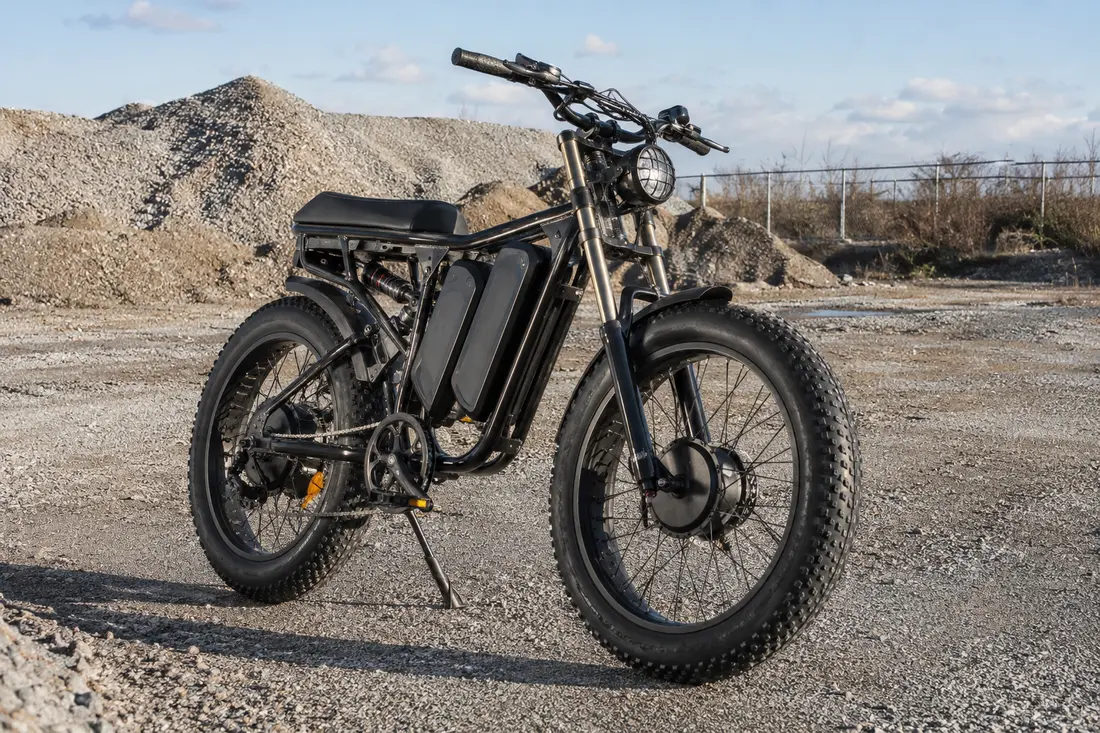
Where TESWAY operates and sells
TESWAY operates a UK-facing direct site and distributes through online channels. Exact seller identity and warranty responsibility should be recorded because the bikes are unusually heavy and expensive to return.
The large batteries and dual-motor layouts target long-range or private-land use. They create demanding storage, charging, transport, braking and servicing requirements that should be solved before purchase.
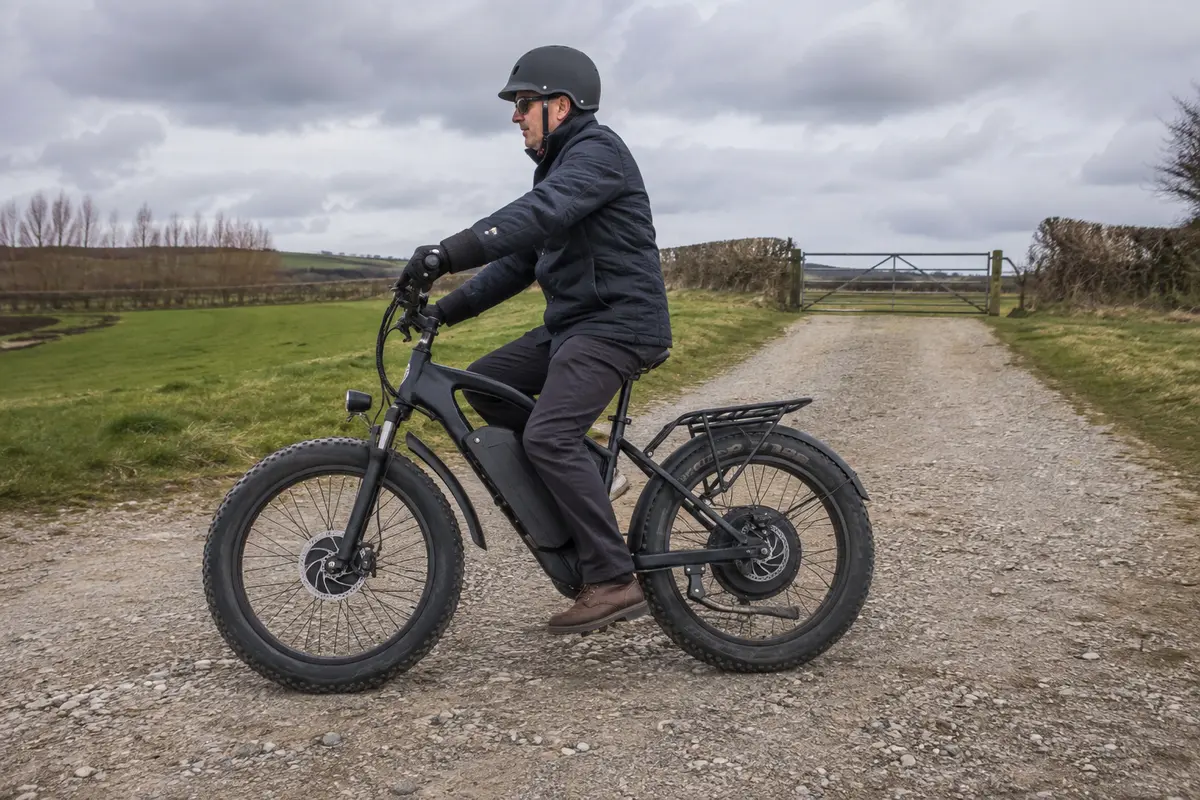
Warranty, servicing and evidence
The brand publishes warranty claims and UK product information, but buyers should obtain the detailed exclusions, labour and carriage terms. Returning a complete heavy bike is very different from posting a small component.
Confirm who can service four-piston brakes, remove the driven wheels, diagnose the controllers and safely assess a very large battery. Many ordinary bicycle stands and carriers will be unsuitable.
A sales platform's consumer processes may help with a transaction, but they do not make every local workshop able to diagnose a proprietary electrical system. Identify service responsibility before the bicycle develops a fault.
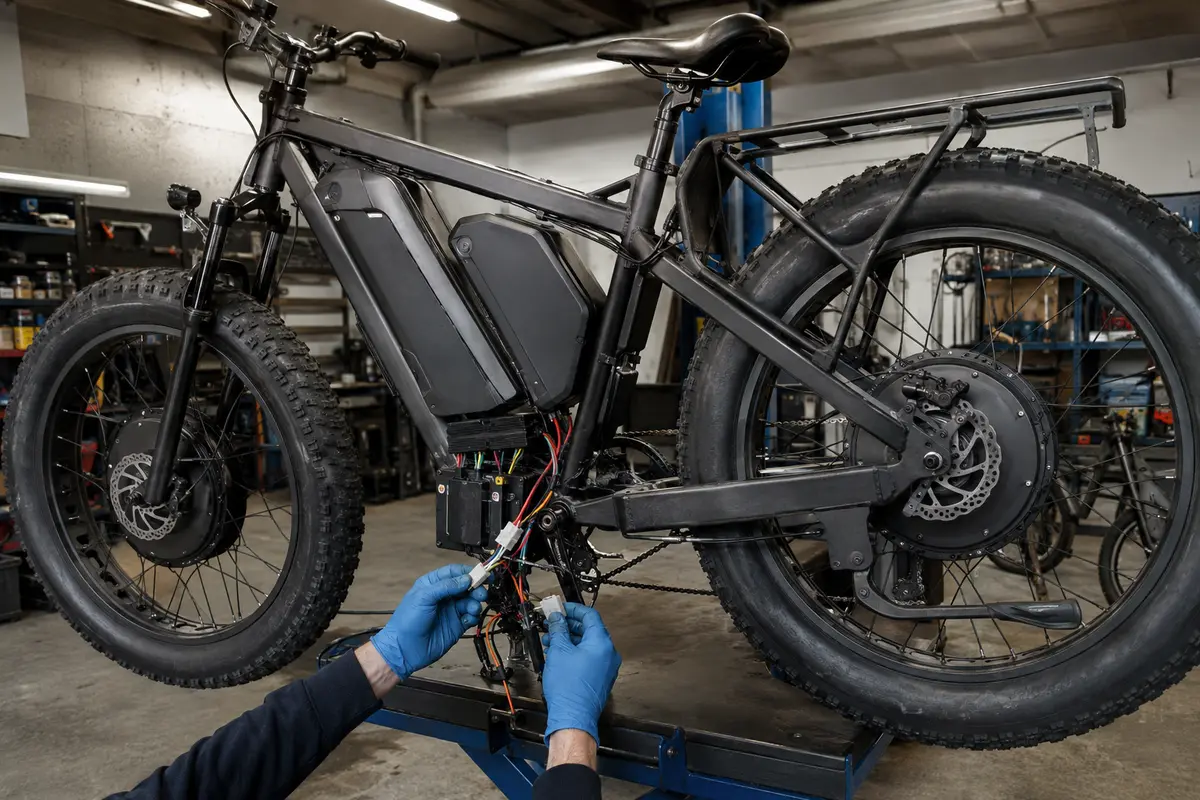
What to check before buying
Start with legality, safe charging, fit, weight and the regular route. A large battery or long equipment list is not good value when the bicycle cannot be lifted, serviced or lawfully used as intended.
- Do not infer EAPC legality from a default 15.5mph display setting.
- Obtain written continuous-power and vehicle-classification evidence.
- Check complete weight, carrier limits, storage access and charging safety.
- Confirm battery, controller, motor, brake and warranty-service arrangements.
TESWAY useful links
Below, we’ve listed relevant information related to TESWAY, together with the official UK rules and battery-safety guidance that apply when assessing an e-bike.
- TESWAY UK website↗UK-facing catalogue and policy information; power and classification claims require careful checking.
- GOV.UK electric-bike rules↗
- UK Government e-cycle battery safety↗